
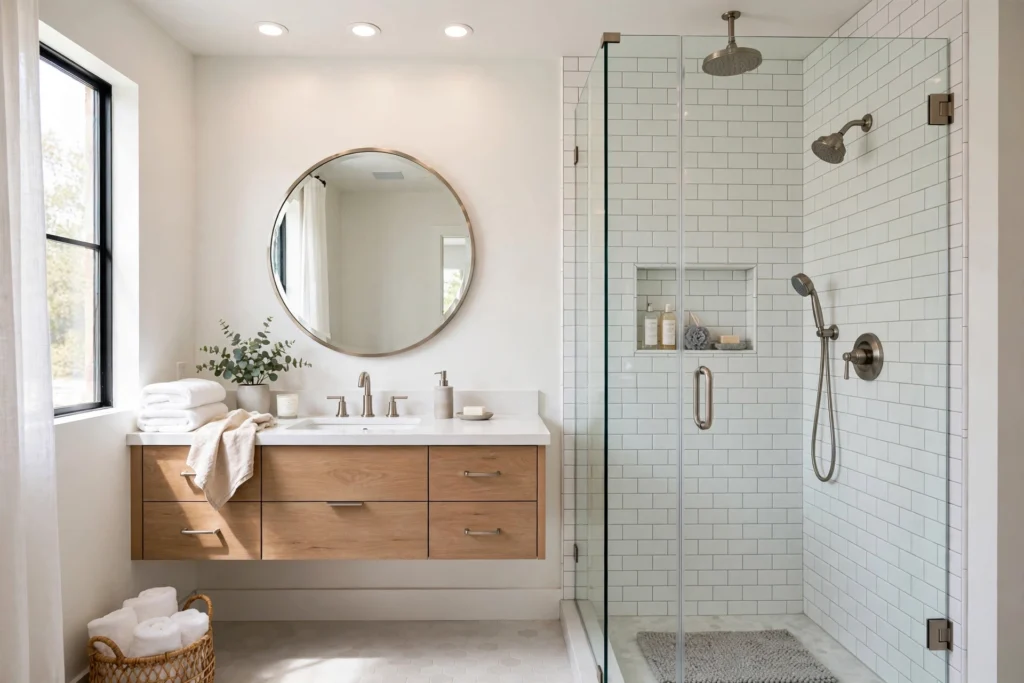
Bathroom remodels are among the most common — and most expensive — home improvement projects in the U.S., and the 2026 numbers reflect that reality. The short answer: a typical bathroom remodel costs about $12,000 on average, with most homeowners spending between roughly $6,600 and $17,700, according to Angi’s 2026 cost data. Where your project lands in (or above) that range depends on the size of the bathroom, the finishes you choose, and whether you move any plumbing.
Bathroom Remodel Cost in 2026: Price Table
| Project scope / line item | Typical cost |
|---|---|
| Budget refresh (paint, fixtures, hardware, reglazed tub — same layout) | $3,000 – $10,000 |
| Mid-range full remodel (new vanity, toilet, tile shower, flooring, lighting — same layout) | $9,000 – $28,000 (about $16,000 typical) |
| Luxury / master bath (custom tile, walk-in shower, double vanity, layout changes) | $20,000 – $60,000+ (about $35,000 typical) |
| Half bath (powder room) remodel | $4,000 – $14,000 |
| Tub-to-shower conversion | $2,000 – $12,000 |
| Ceramic/porcelain tile, installed | $10 – $40 per sq ft (about $20 typical) |
| New toilet, installed | $350 – $800 (about $575 typical) |
| New faucet, installed | $120 – $300 (about $210 typical) |
| New vanity with countertop, installed | $800 – $3,500 |
| Demolition and haul-away | $1,000 – $2,300 |
| Permits and inspections | $100 – $1,000 |
The budget-tier figures come from Modernize’s 2026 guide ($3,000–$10,000 budget, $10,000–$25,000 mid-level, $25,000–$40,000+ high-end), while the line-item averages — toilet, faucet, tile, tub-to-shower — are drawn from published 2026 cost-guide compilations. At the very top end, Remodeling Magazine’s 2025 Cost vs. Value Report prices a full contractor-run upscale bathroom remodel at $81,612, and some luxury primary baths in 2026 guides exceed $100,000.
What Affects the Price of a Bathroom Remodel
1. Bathroom size
Size drives the two most expensive line items: tile and labor. Angi’s 2026 data puts remodel costs at roughly $70 to $250 per square foot, so a 40-square-foot hall bath and a 100-square-foot primary suite are fundamentally different projects even at the same finish level.
2. Moving plumbing
This is the single biggest cost lever in a bathroom. Keeping the toilet, shower, and vanity in their existing locations avoids rerouting drain and supply lines — published 2026 guides note that layout changes with moved plumbing can add around $5,000 or more to a project. If your layout already works, leaving the plumbing footprint alone is the easiest way to stay in budget.
3. Tile and material choices
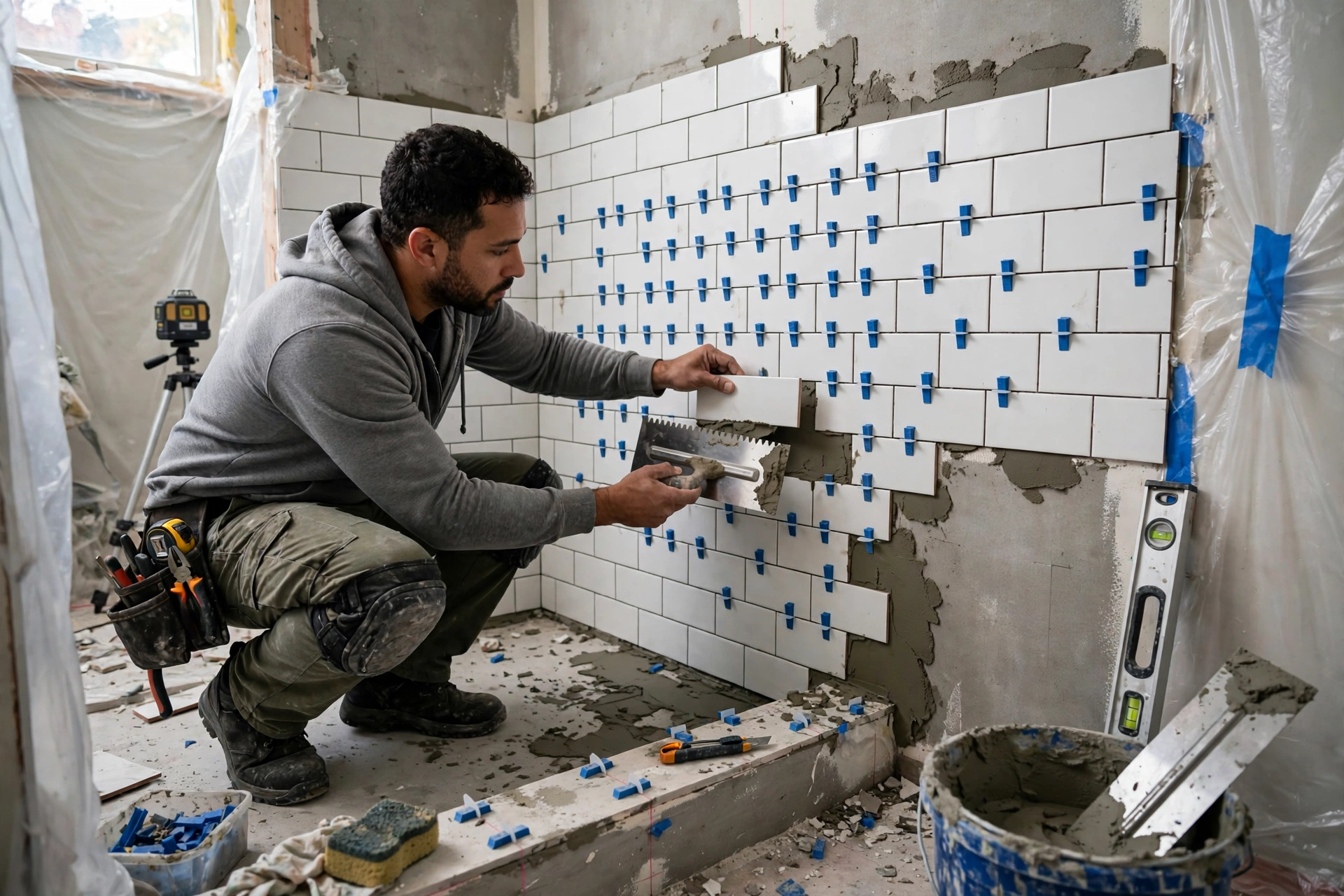
Installed tile spans an enormous range — standard ceramic can cost around $10 per square foot installed, while natural stone or large-format porcelain can reach $25 to $50 per square foot. The shower is where tile costs multiply, because shower walls and floor tiles add up fast. Solid-surface shower kits ($600–$1,800 with labor, per Modernize) are a common budget alternative to full tile.
4. Labor rates in your region
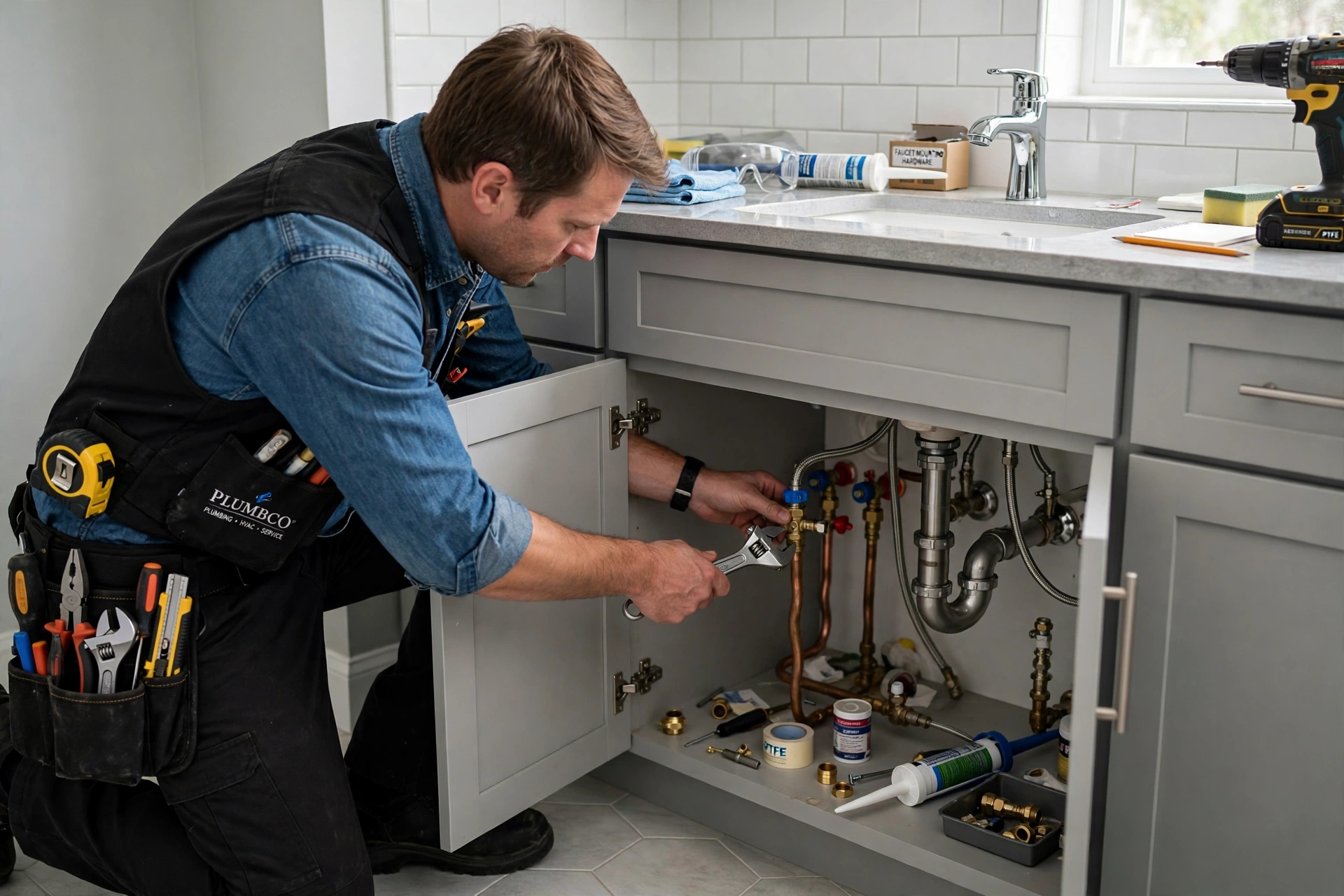
Labor typically accounts for 40 to 65% of a bathroom remodel budget. Plumber and electrician rates in 2026 guides run roughly $85–$175 per hour and $60–$145 per hour respectively, and contractors in high-cost metros charge substantially more than those in lower-cost markets. Demolition alone runs $1,000 to $2,300 before a single new fixture goes in.
5. Hidden surprises behind the walls
This Old House’s 2026 survey of 1,000 recent renovators found the typical project range was $6,456 to $24,715 — and about one in three said the final bill exceeded expectations, most often because of hidden water damage, plumbing upgrades, or subfloor repairs found during demolition. Plan a contingency of 10–15% for a standard remodel, more for older homes.
Practical Money-Saving Tips
- Keep the layout. Avoiding moved plumbing is the single most effective budget move — it saves thousands in rough-in labor and keeps the project simpler.
- Refinish instead of replace. Reglazing a sound tub costs a fraction of a new one, and repainting or refacing vanity cabinets delivers a fresh look without the cost of custom cabinetry.
- Choose mid-range tile strategically. Spend your tile budget where it shows — the shower and floor — and use simple, inexpensive tile in less visible areas. Large-format tiles cost more per tile but need fewer of them and less grout maintenance.
- Do the cosmetic work yourself. Painting, demolition (if you’re careful), installing mirrors, and swapping hardware are realistic DIY tasks that cut labor hours from the bill.
- Get three written, itemized quotes. Compare identical scopes line by line. The cheapest bid often omits things like waterproofing membrane or permit fees, which you will pay one way or another.
- Buy fixtures early. Contractor delays tied to backordered vanities and shower systems are common in 2026; ordering before demolition keeps the schedule (and the labor bill) from stretching.
- Keep your contingency untouched. Set aside 10–15% of the budget for surprises and treat it as spent money. In older bathrooms, water damage behind a shower wall is more rule than exception.
Regional Price Notes
Bathroom labor costs vary dramatically by metro. High-cost coastal markets — think New York City, the Bay Area, Los Angeles, Boston, and Seattle — commonly run 25–45% above national averages: the same mid-range hall bath that costs $14,000–$18,000 in the Midwest or South can cost $20,000–$28,000 in these metros, driven mostly by skilled-labor rates and stricter permitting. Mid-sized cities and much of the South and Midwest (places like Dallas, Atlanta, Columbus, and Phoenix) tend to sit at or slightly below the national figures quoted above. Rural and secondary markets can run 15–20% below national averages, though contractor availability can be thinner.
One cost that is fairly universal: permits. Most cities require permits for plumbing and electrical changes, and published 2026 guides put the permit and inspection line at roughly $100 to $1,000 depending on the jurisdiction and project scope.
Bathroom Remodel FAQs
How much does a small bathroom remodel cost?
Published 2026 estimates put small-bathroom remodels at roughly $1,500 to $15,000, with an average around $6,500. A cosmetic refresh of a 5×7 hall bath — new vanity, toilet, paint, and fixture swaps with no layout change — is the classic “under $10,000” project.
Is it cheaper to remodel a bathroom or add a new one?
Remodeling an existing bathroom is almost always cheaper than adding a new one. Current 2026 estimates for bathroom additions range from about $5,000 to $75,000, because new construction requires framing, plumbing rough-in from scratch, and often electrical panel capacity work. Remodeling works with the plumbing and structure you already have.
What is the most expensive part of a bathroom remodel?
Labor is typically the largest slice of the bill — 40 to 65% of the total. Within labor, tile installation and plumbing work cost the most. On the materials side, the shower (tile, glass, fixtures) and the vanity are the priciest items, followed by flooring.
How long does a bathroom remodel take?
A standard hall or guest bathroom typically takes 3 to 5 weeks with a contractor; a master bath with layout changes can run 5 to 9 weeks or more. Ordering fixtures late is the most common cause of timeline overruns — get materials on site before demolition starts.
Do bathroom remodels add home value?
Yes — mid-range bathroom remodels are among the stronger remodeling investments, with published 2026 guides citing a return on investment of roughly 65–80% at resale. Upscale and luxury remodels return a smaller percentage of their cost, so spend for your own use if you’re going high-end.
Related Cost Guides
If your remodel includes any plumbing work — rerouting supply lines, moving a drain, or installing a new shower valve — check our plumber cost guide for 2026 hourly rates and flat fees so you can budget that portion accurately. And if the bathroom is part of a bigger renovation plan, our kitchen remodel cost guide breaks down 2026 pricing for the other big room in the house.
A Note Before You Start
All figures in this guide are national planning estimates compiled from published 2026 industry sources — Angi, Modernize, HomeGuide, This Old House, and Remodeling Magazine’s Cost vs. Value Report — not quotes for your specific bathroom. Your actual cost will depend on your home’s condition, your local labor market, and the finishes you choose. Get 2–3 local quotes with itemized scopes before you commit, keep a 10–15% contingency, and make sure every contractor is licensed and insured.