
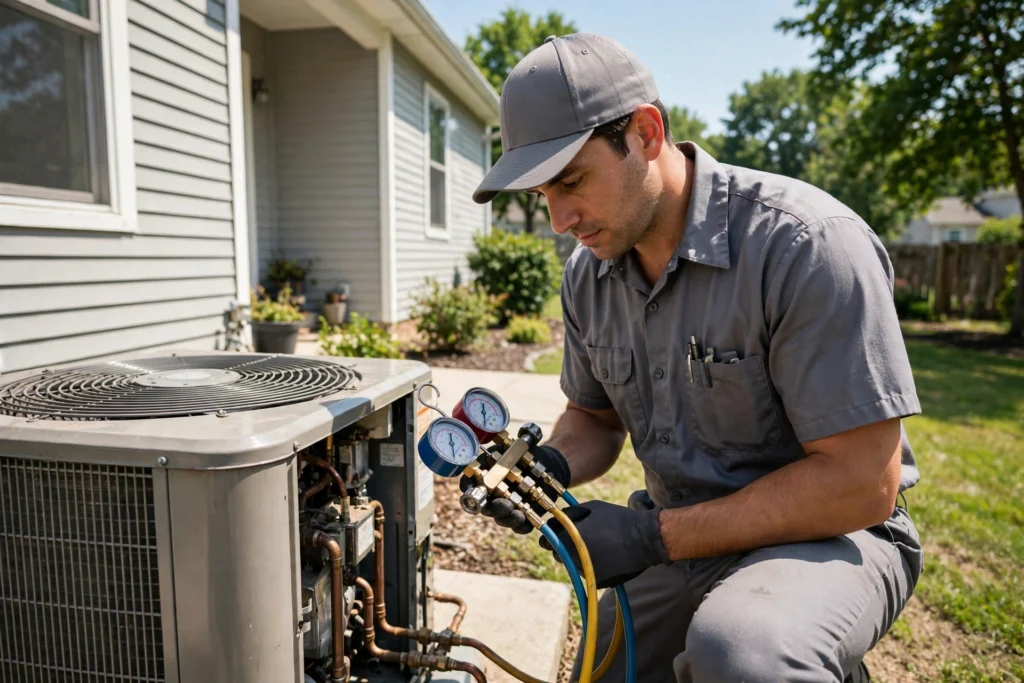
Quick answer: Air conditioner repair in 2026 costs about $350 on average, with most common repairs falling between $150 and $650, according to Angi’s 2026 HVAC repair cost data. Minor fixes like a capacitor or thermostat replacement typically run $75–$400, while major work such as a compressor replacement can climb to $800–$2,800 or more.
If your AC has quit in the middle of a heat wave, the last thing you want is a surprise bill on top of a sweaty house. This guide breaks down what air conditioner repairs actually cost in the United States in 2026, what drives the price up or down, and how to avoid overpaying. All figures below reflect real published cost data — chiefly Angi’s 2026 HVAC repair guide — presented here in our own summary. Prices are national averages; your local quote may differ, so always get two or three written estimates.
AC Repair Cost Table: 2026 Average Prices
| Repair Type | Average Cost | Low Range | High Range |
|---|---|---|---|
| Diagnostic / service call fee | $135 | $75 | $200 |
| Thermostat replacement | $300 | $100 | $600 |
| Capacitor replacement | $350 | $200 | $500 |
| Condensate drain line cleaning | $150 | $80 | $215 |
| Refrigerant recharge (R-410A) | $450 | $200 | $700 |
| Refrigerant leak repair + recharge | $900 | $270 | $1,625 |
| Blower or fan motor replacement | $600 | $300 | $900 |
| Circuit board replacement | $335 | $120 | $550 |
| Evaporator coil replacement | $1,600 | $650 | $2,600 |
| Compressor replacement | $2,000 | $865 | $3,250 |
Table notes: Figures compiled from Angi’s 2026 HVAC repair data and the 2026 AC repair cost guide at costrepairguide.com. HVAC technician labor typically runs $75–$150 per hour, which is rolled into most of the repair totals above. Diagnostic fees are often waived or credited if you hire the same company to do the repair — always ask.

What Raises or Lowers the Cost of an AC Repair?
1. The type of repair
This is the single biggest driver of your bill. Replacing a $30 capacitor is an hour of labor; replacing a compressor means opening the sealed refrigerant system, several hours of work, and an expensive part. As a rule of thumb, anything touching refrigerant or the sealed system (compressor, coil, leak repair) costs several times more than electrical or airflow fixes. For perspective on how other home trades bill, check the average cost of a plumber in 2026 — HVAC and plumbing labor rates move together in most markets.
2. Unit size and age
Larger central air systems (4–5 ton units) use bigger, pricier components than a 1.5-ton unit cooling a small home. Age matters just as much: a unit over 12–15 years old is more likely to need hard-to-find parts, and older units often develop multiple problems at once, stacking repairs onto a single visit.
3. Refrigerant type
Most modern systems use R-410A, which costs roughly $50–$80 per pound to recharge. Older systems still running on R-22 (phased out under federal regulation) pay a premium of $90–$150 per pound or more, and that refrigerant is getting scarcer every year. If your R-22 system develops a major leak, the refrigerant bill alone can make a full replacement the smarter choice.
4. Brand and parts availability
Common brands (Carrier, Trane, Lennox, Goodman, Rheem) have parts widely available at competitive prices. Premium or discontinued models can carry parts markups of 30–50% and longer wait times, which also means longer labor for a technician sourcing the component.
5. Emergency and after-hours service
A breakdown on a Friday night in July will cost you. Emergency, weekend, and holiday calls typically add $100–$300 to the total, and during extreme heat waves some companies charge premium diagnostic fees. If the system is limping along but not dead, scheduling a weekday appointment can save real money.
6. Warranty status
A failed part under manufacturer warranty can cut your bill to just labor — or to nothing at all if the labor warranty is still active. Dig out your warranty paperwork (or the installer’s name) before you call; many homeowners pay full price for repairs that were covered.
How to Save Money on AC Repairs
- Keep up with annual maintenance. A professional tune-up ($80–$150) catches worn capacitors, low refrigerant, and dirty coils before they become emergency calls. Many companies discount repairs for maintenance-plan members.
- Change your filter. A clogged filter is the most common cause of frozen coils and poor cooling, and it’s a $5–$20 fix you do yourself. Check it monthly during cooling season.
- Clear the outdoor unit. Grass clippings, leaves, and weeds choking the condenser force the system to work harder. Keep two feet of clearance around it — free and effective.
- Get 2–3 written quotes for big repairs. For anything over $500, a second opinion is almost always worth the extra diagnostic fee. Ask each contractor to itemize parts, labor, and refrigerant separately.
- Schedule repairs off-peak. May and October appointments are typically cheaper and faster than peak-summer calls.
- Know the 50% rule. If a repair costs more than half the price of a new system — or your unit is 12+ years old and breaking down repeatedly — put that money toward a replacement instead of patching it again.
- Ask about utility rebates. Some utilities offer rebates for high-efficiency replacements or smart thermostats, which can soften the cost of upgrading an aging system.
Regional Notes: Where AC Repair Costs More
Cooling costs follow the thermometer. In hot-climate states — Texas, Florida, Arizona, Nevada, and the Gulf Coast — HVAC companies stay booked solid from May through September, and peak-demand pricing is common. Parts sell out during extended heat waves, which can add days of waiting to a compressor or coil repair. Labor rates in these states run at or above the national average.
In the Northeast and Upper Midwest, where AC is seasonal, summer labor rates can spike but shoulder-season repairs (spring and fall) are often the cheapest in the country. In California and the Pacific Northwest, overall contractor rates run high, so even simple repairs land near the top of the national range.
One more regional quirk: coastal and desert areas corrode outdoor units faster (salt air in Florida, dust and extreme heat in Arizona), which means more frequent — though usually minor — repairs over the life of the system.
Frequently Asked Questions
How much does AC repair cost in 2026?
The national average is about $350, with most common repairs between $150 and $650, per Angi’s 2026 HVAC data. Minor repairs run $75–$400 and major repairs $800–$2,800+. A full central AC replacement, by contrast, averages $5,000–$12,500.
What is the most common AC repair?
Capacitor replacement is the most frequently reported residential AC repair, especially in summer — heat and heavy use wear capacitors down, and failure is sudden. Thermostat problems and clogged condensate drain lines are the next most common service calls. A persistently clogged or leaking drain line can also cause water damage that needs other trades; the average cost of a plumber in 2026 is a useful reference if your AC leak has affected plumbing or drywall.
How long does a typical AC repair take?
Most repairs are completed in 1–3 hours, including diagnosis. Capacitor, thermostat, and drain-cleaning jobs often take under an hour. Refrigerant leak repairs, coil replacements, and compressor jobs can take half a day or more, especially if parts must be ordered.
Should I repair or replace my AC?
Repair is usually the right call if the unit is under 10 years old and the fix costs less than half the price of a new system. Consider replacing when the system is 12–15+ years old, uses phased-out R-22 refrigerant, needs a compressor or coil replacement, or has required several repairs in the past two years.
Can I repair my AC myself?
Homeowners can safely change filters, clean the outdoor unit, and check thermostat batteries and breakers. Anything involving electrical components beyond that — and anything touching refrigerant, which legally requires EPA certification — should be left to a licensed technician. DIY mistakes on sealed-system work are expensive to undo and can void your warranty.
The Bottom Line
Budget around $350 for a typical air conditioner repair in 2026, less for simple fixes and considerably more for sealed-system work. Keep the system maintained, call early when you notice weak cooling or strange noises, and compare at least two quotes on any repair over $500. All prices here are estimates based on published national data — for an accurate figure, get 2–3 local quotes from licensed HVAC contractors in your area. For more on how we research these guides, see our about us page, and note our standard pricing disclaimer.
Pingback: How Much Does AC Repair Cost in Florida in 2026? – Home Service Cost Guide
Pingback: How Much Does HVAC Installation Cost in 2026? – Home Service Cost Guide