
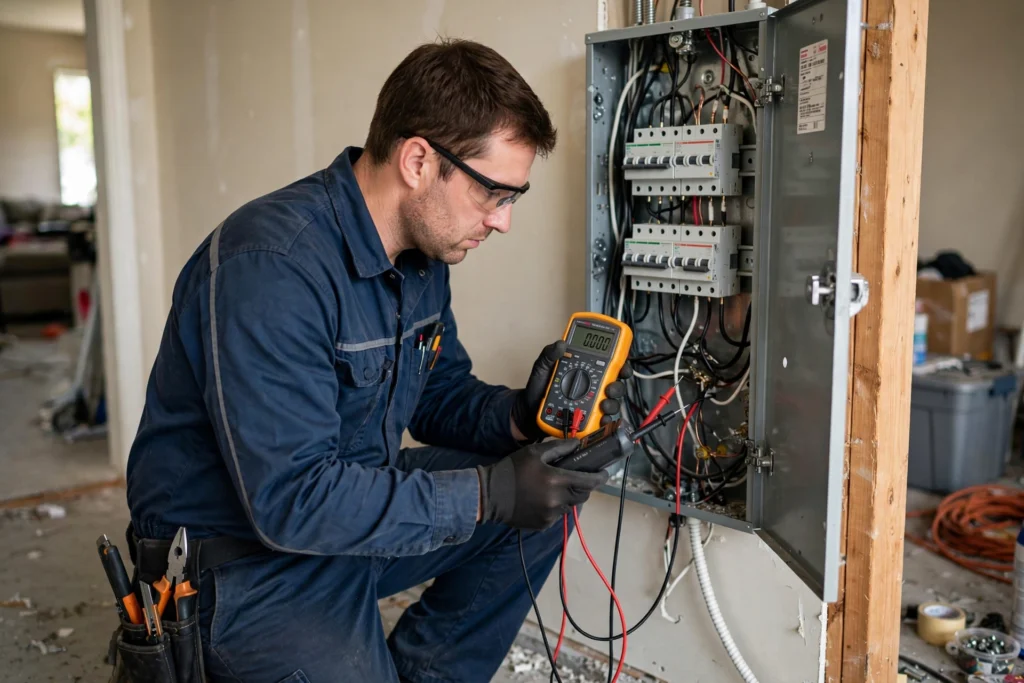
Hiring an electrician is one of those home service costs that catches many homeowners off guard. A simple job can take an hour and cost $150, while a panel upgrade can run into the thousands — and most people have no idea which price they should expect until the bill arrives.
The Short Answer: What Electricians Charge in 2026
Most residential electricians in the United States charge between $50 and $130 per hour, with the national average sitting around $50 to $100 per hour. According to HomeGuide’s 2026 pricing data, typical residential jobs cost between $150 and $500 total, while Angi reports that most homeowners pay an average of about $350 per electrical project. Keep in mind that nearly all electricians charge a minimum service call fee — usually $100 to $200 — which covers travel, inspection, and the first bit of labor even if the fix itself takes twenty minutes.
For reference on other trades, the average cost of a plumber in 2026 follows a similar pattern: a baseline hourly rate plus job-specific pricing that climbs with complexity.
| Job | Average cost | Low range | High range | Per-hour rate |
|---|---|---|---|---|
| Standard hourly rate (journeyperson) | $75 | $50 | $130 | $50–$130/hr |
| Electrical panel upgrade (100A to 200A) | $1,800 | $1,300 | $2,500 | $50–$130/hr (multi-day job) |
| Outlet or light switch installation | $200 | $100 | $350 | $50–$130/hr (1–2 hrs) |
| Ceiling fan installation | $300 | $150 | $500 | $50–$130/hr (2–3 hrs) |
| Whole-home rewiring (1,800 sq ft) | $12,000 | $7,200 | $27,000 | Quoted per project |
Ranges based on published 2026 data from HomeGuide, Angi, and industry pricing guides. Prices vary by market — see the regional notes below.
Hourly Rates by Experience Level
Not all electricians charge the same rate, and experience level is the biggest reason why. According to Angi’s 2026 data for major metro areas, apprentice electricians typically bill $40–$69 per hour and work under supervision; journeyperson electricians — the licensed professionals who handle most residential work — charge roughly $64–$104 per hour; and master electricians, who carry the highest credential and handle panel upgrades and code-sensitive work, often bill $90–$138 per hour.
Nationally, Housecall Pro’s 2026 pricing guidance suggests most electricians should charge in the $40–$100 per hour range depending on license level, overhead, and local market. Higher-cost metros like Los Angeles and San Francisco push the top of that band: Angi’s 2026 city data shows LA electricians billing $58–$115 per hour and San Francisco $53–$107 per hour, with first-hour charges of $150–$160 because travel and setup are baked in.
Common Electrical Jobs and What They Cost
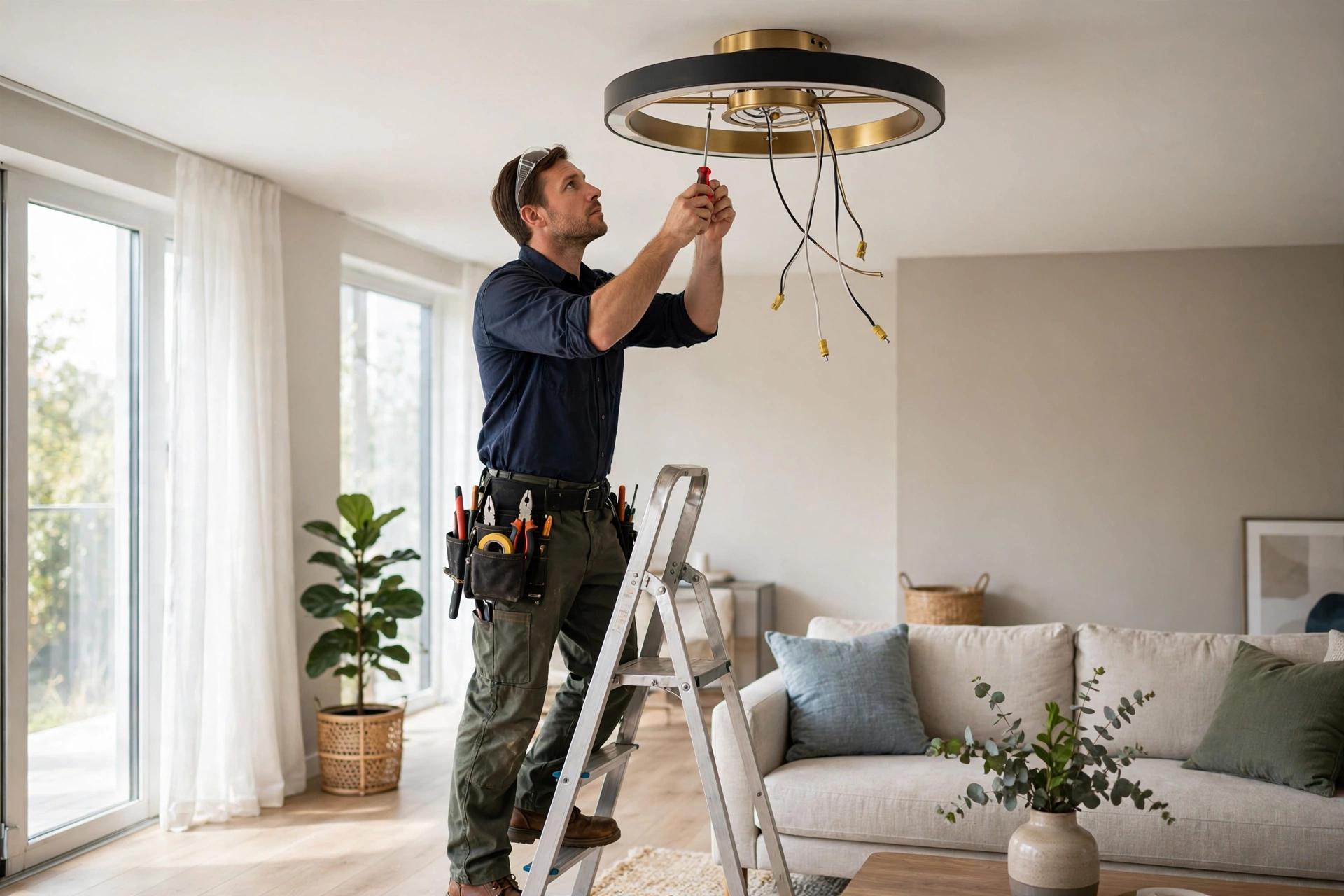
Hourly rate jobs: troubleshooting and repairs
Diagnostic work — flickering lights, tripping breakers, dead outlets — is usually billed by the hour. HomeGuide reports troubleshooting rates of $90–$150 per hour. The good news: a simple fix is often resolved within the first hour. Always ask whether the electrician bills in 15-minute increments after the first hour or rounds up to full hours — that detail alone can save you $50–$100.
Electrical panel upgrade: $1,300–$2,500
Upgrading a 100-amp panel to 200 amps is one of the most common big-ticket electrical jobs, and it is essential if you’re adding an EV charger, heat pump, or workshop equipment. HomeGuide puts the cost at $1,300–$2,500 for a 200-amp panel and $2,000–$4,000 for a 400-amp service upgrade. A full service upgrade with new wiring runs $1,800–$3,500 per industry 2026 pricing guides.
Outlet and switch installation: $100–$350
Installing a new standard 120V outlet costs $150–$350 installed according to HomeGuide, with labor alone running $149–$310. Replacing an existing outlet or switch is cheaper — typically $50–$250 including the service call — because no new wiring needs to be fished through walls. A 240V outlet for a dryer or EV charger costs more, $250–$800, since it requires a dedicated circuit.
Ceiling fan installation: $150–$500
Mounting a ceiling fan on an existing, properly braced electrical box runs $245–$485 per 2026 industry pricing data. If the box needs reinforcement or new wiring has to be run from the switch, expect the high end of that range. This is a popular example of a job where the hardware is cheap ($50–$150) but the labor dominates the bill.
Whole-home rewiring: $7,200–$27,000
Rewiring is the big one. Industry 2026 pricing puts a full rewire of an 1,800-square-foot home at $7,200–$27,000, and HomeGuide cites $7–$10 per linear foot of wire run. Older homes with plaster walls, aluminum wiring, or limited attic access sit at the top of that range. It is a multi-day project that almost always requires permits and inspection.
What Raises or Lowers the Price
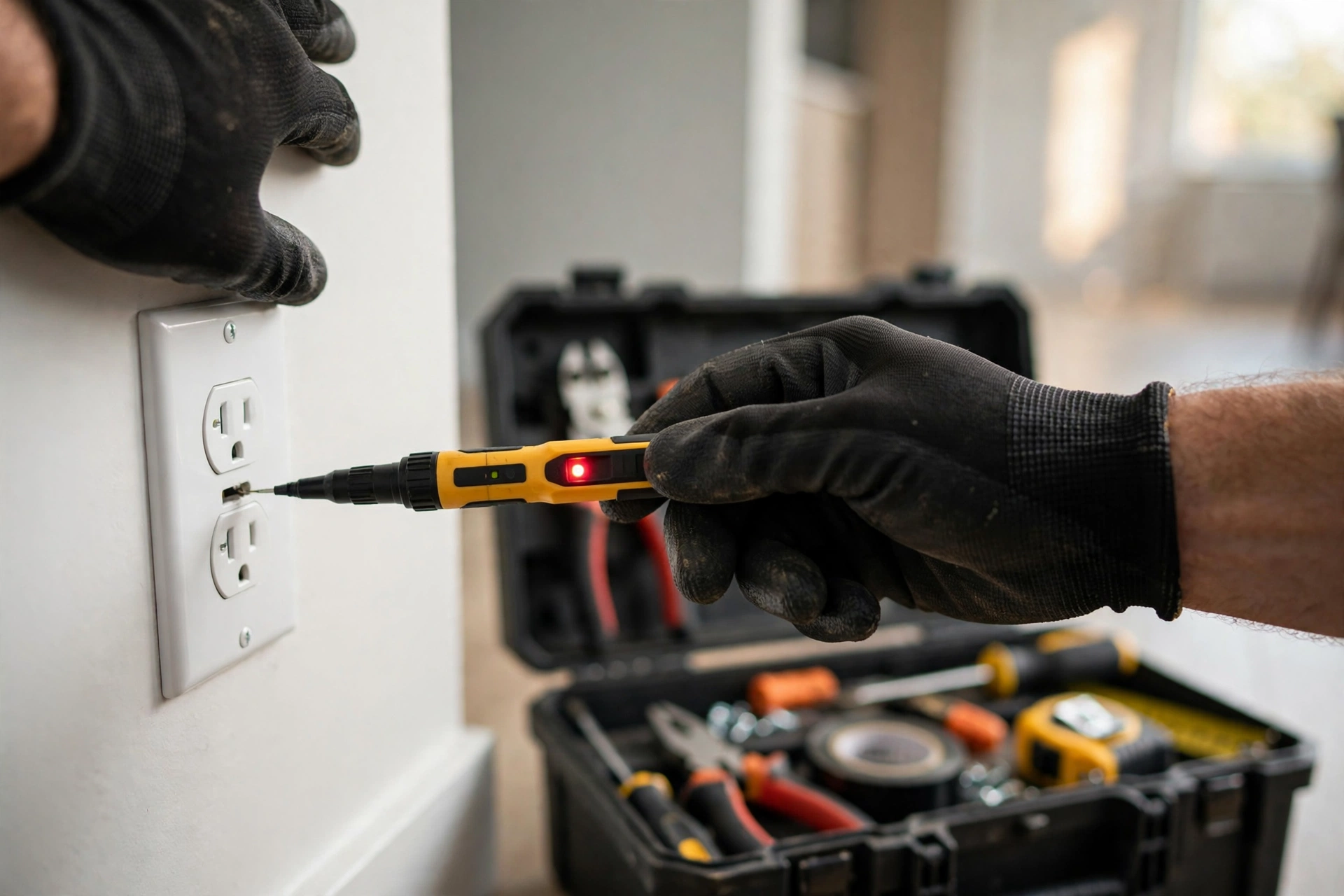
Job complexity and accessibility
Complexity is the number-one cost driver. Swapping a breaker in an open, labeled panel takes minutes; fishing wire through finished plaster walls in a two-story home can take hours. Attics, crawlspaces, and concrete walls all add labor time, and labor is what you’re really paying for.
Emergency and after-hours calls
Need an electrician at 9 p.m. on a Saturday because a breaker panel is sparking? Expect to pay 1.5 to 3 times the standard rate, per 2026 industry pricing data. Angi notes that emergency service calls often cost roughly double the normal hourly rate. For anything that isn’t genuinely dangerous, booking during normal business hours is one of the easiest ways to save.
Local labor rates
Where you live matters enormously. Angi’s 2026 city pages show Raleigh, NC electricians charging $37–$75 per hour, Denver $55–$110, and Phoenix $52–$105 — while Los Angeles and San Francisco sit near the top at $53–$115. Metro areas almost always cost more than smaller towns, and big-city master electricians bill the most.
Permits and inspections
HomeGuide reports electrical permits cost $50–$350 depending on project size, with inspections adding another $100–$250. Permits are non-negotiable for panel upgrades, rewiring, and new circuits — and any electrician who suggests skipping them is waving a red flag.
Money-Saving Tips That Actually Work
- Batch small jobs into one visit. Because of the $100–$200 service call fee, having one outlet replaced costs nearly as much as having four done in the same visit. Walk through your home and list every outlet, switch, and fixture issue before calling.
- Buy your own fixtures and hardware. Supplying the ceiling fan, outlets, or light fixtures yourself avoids the contractor’s markup on materials — just confirm compatibility with the electrician first.
- Stick to standard hours. Schedule non-urgent work for weekday business hours and avoid after-hours premiums, which can double or triple the rate.
- Get 2–3 written quotes. Labor rates for the exact same job can vary by 50% or more between companies. Compare itemized quotes, not just the bottom line.
- Match the credential to the job. You don’t need a master electrician to replace outlets; a licensed journeyperson is fully qualified and bills less. Save the master for panel upgrades and code-heavy work.
- Prepare the work area. Clearing furniture and attic access saves billable time, since the clock typically starts when the electrician arrives.
Regional Notes: Where Electricians Cost More (or Less)
The Northeast and West Coast run higher; the South and Midwest generally run lower. Angi’s 2026 data illustrates the spread: coastal California metros ($53–$115/hr) versus Raleigh, NC ($37–$75/hr). Denver, with a cost of living about 10% above the national average, lands in the middle at $55–$110/hr.
Big-city premiums are real. Within any state, major metros add 20–40% over surrounding towns — higher rents, higher insurance, and more overhead get passed straight through to the hourly rate. If you’re in a suburb, quotes from electricians in smaller nearby towns are often noticeably cheaper.
Climate plays a role too. In hot markets like Phoenix, summer attic work commands a premium, and panel upgrades tied to air-conditioning load spike in demand. Booking upgrades in spring or fall can mean faster scheduling and occasionally better pricing.
If you want to learn more about how we put these guides together, visit our About Us page, or reach out through our Contact Us page with a pricing question.
Frequently Asked Questions
How much does an electrician cost per hour in 2026?
Between $50 and $130 per hour nationally, with an average of about $50–$100 per hour according to HomeGuide and Angi data. Apprentices bill at the low end ($40–$69/hr), master electricians at the high end ($90–$138/hr). Most also charge a $100–$200 minimum service call fee.
Why do electricians charge a service call fee?
The fee covers travel time, vehicle costs, the initial safety inspection, and the administrative cost of the visit — work the electrician does whether the repair takes ten minutes or two hours. It typically runs $100–$200, and the first hour of labor is often bundled into it.
Is it cheaper to hire an electrician by the hour or by the job?
For small, predictable jobs like replacing outlets or installing a ceiling fan, flat-rate pricing is usually better because you know the total upfront — and many electricians quote flat rates for these tasks. Hourly billing makes more sense for diagnostic work where the scope is unknown, like tracking down a faulty circuit.
How much does it cost to upgrade an electrical panel in 2026?
A 100-amp to 200-amp panel upgrade costs $1,300–$2,500 according to HomeGuide, with full service upgrades (panel plus new wiring) reaching $1,800–$3,500. A 400-amp upgrade can run $2,000–$4,000. Permits and inspection are required and typically add $50–$350.
Do I really need a licensed electrician, or can I DIY small jobs?
Simple tasks like changing a light bulb or resetting a breaker are safe DIY. Anything involving wiring, breakers, panels, or new circuits should be done by a licensed electrician — faulty electrical work causes fires, voids home insurance, and violates building codes in most states. The permit and inspection process exists to protect you.
The Bottom Line
Budget $50–$130 per hour for an electrician in 2026, plus a $100–$200 service call fee — so plan on at least $150–$300 for any visit. Bigger projects follow their own pricing: $100–$350 for outlets, $1,300–$2,500 for panel upgrades, and $7,200–$27,000 for a full rewire. Batch your small jobs, book during standard hours, and always compare quotes.
Please note: all prices in this guide are estimates based on published 2026 industry data (HomeGuide, Angi, and contractor pricing guides). Your actual cost will depend on your location, the electrician’s experience, and the specifics of the job — so always get 2–3 local written quotes before committing. Read our full Disclaimer for details.
Pingback: How Much Does an Electrician Cost in Texas in 2026? – Home Service Cost Guide
Pingback: How Much Does a Kitchen Remodel Cost in 2026? – Home Service Cost Guide
Pingback: How Much Does an Electrician Cost in London in 2026? – Home Service Cost Guide